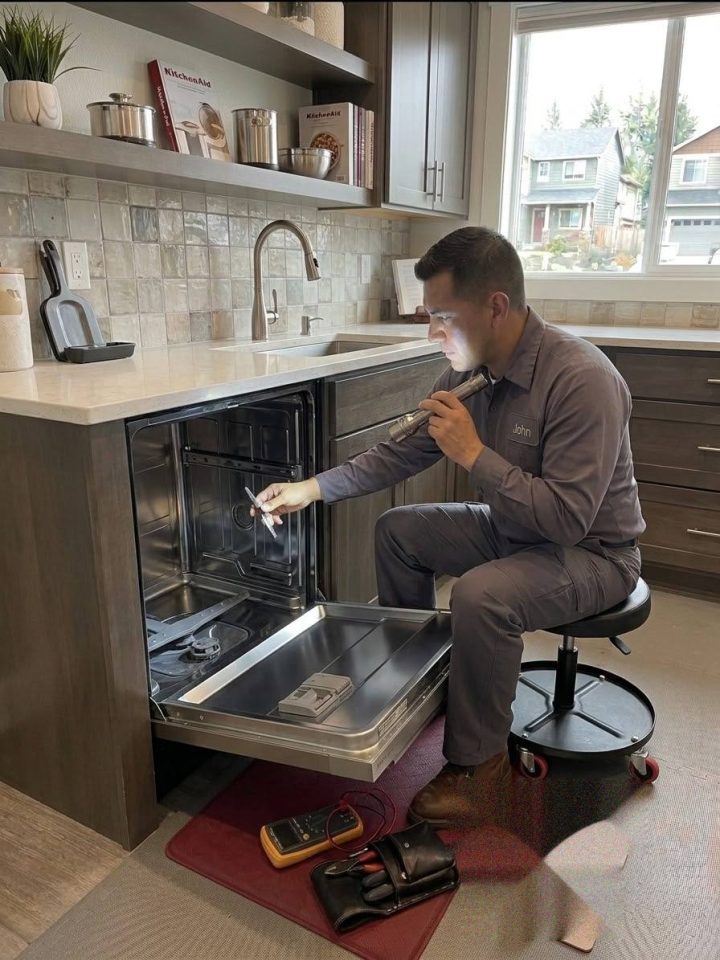
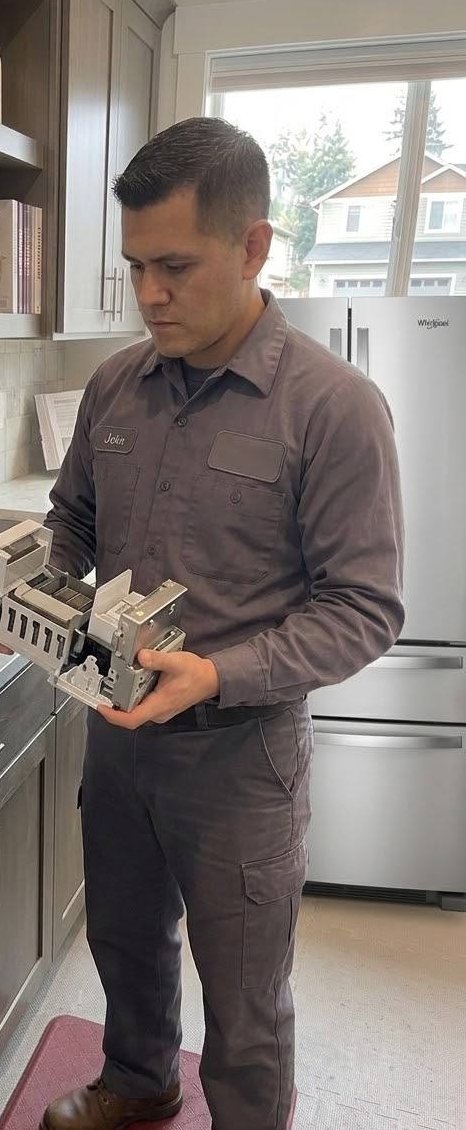
Gas or electric, the visit opens with the safety questions and closes with one number — from $285, all found — for whatever the range actually needs.
Mon–Fri 8–7 · Sat 9–3 · the figure holds parts, labor and the looking — one number, no ceiling games
Cooking gear announces trouble loudly. Here's what the noise usually means.
| What You'd Say on the Phone | What It Usually Turns Out to Be |
|---|---|
| “One burner just died.” | Electric: the element, its receptacle, or the switch behind the knob. Gas: a fouled port or a lazy igniter. Either way, an honest afternoon's work. |
| “The igniter clicks forever.” | Wet or fouled electrode, a cracked ceramic, or a spark module winding down. Persistent clicking with no flame earns a prompt visit — unburnt gas gets respect here. |
| “The oven runs hot — or cold.” | A drifting sensor or a weakening element. The proof is a reference thermometer through a full preheat, not a five-minute glance. |
| “The bake element looks blistered.” | It's finished — and it fails theatrically if left in service. A straightforward swap on nearly every electric oven on the route. |
| “Half the cooktop is dead.” | Paired failures usually mean a feed problem, not two coincidences — sometimes the house's, sometimes the machine's. The meter says which before anything is bought. |
| “The self-clean killed it.” | The classic: extreme heat finds the weakest link, often a thermal fuse or hidden element. Well-known failure, well-practiced repair. |
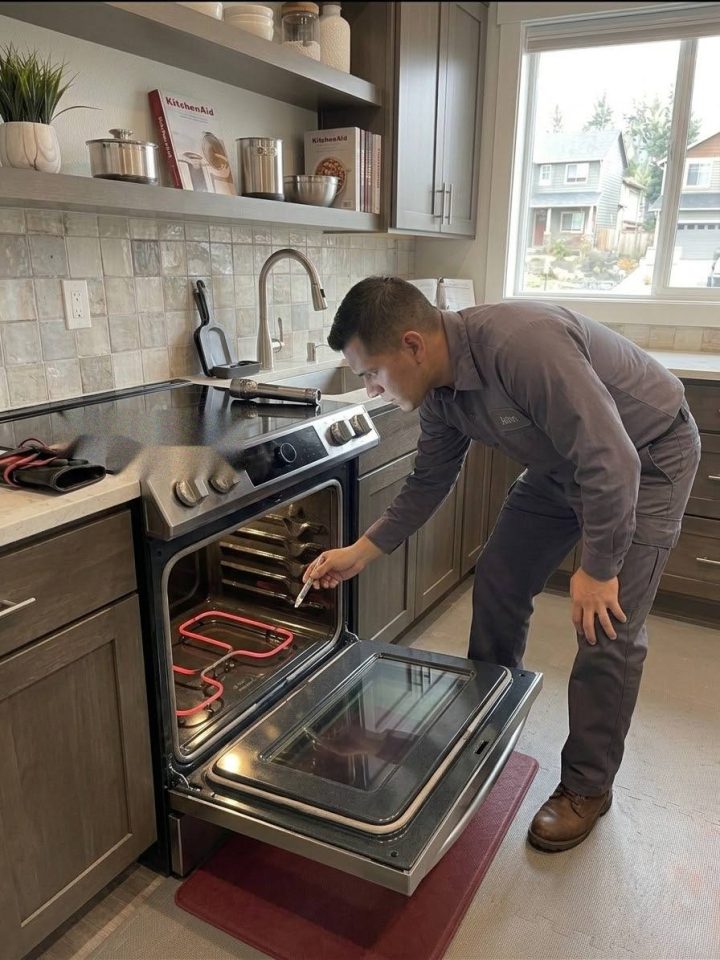
Cooking machines get one extra rule the laundry room doesn't: whatever smells of gas or trips a breaker gets rendered safe before any diagnosing starts. If you ever smell gas outright, skip this page — windows open, gas company first, the range will keep. Everything less dramatic books normally, and the visit runs its order: prove what the house is feeding the machine, then put the machine itself on trial.
The pricing works like everything at this counter. Once the fault is confirmed, one all-found figure from $285 covers the element or igniter or switch, the labor, and the diagnosis that found it. Ranges reward that honesty more than any other machine — they're built to be repaired, the veterans especially, and a figure with everything inside makes the keep-or-replace decision a clean one. When a range genuinely isn't worth it — a cracked glass top on a builder-grade unit, say — $100 buys the visit and the plain answer.
Lynden's big family kitchens run ovens like small bakeries and expect them level and true; the county's farmhouses keep gas veterans worth every part they'll ever need; Bellingham's rentals hold ranges of mystery age that get dated off the plate and judged fairly. The counter's seen the whole spread, and the slate reads the same for all of it.

An igniter that clicks without lighting is asking for service. Shut the burner, use another, book the visit — unburnt gas never improves a kitchen.
Boil-overs foul gas ports and burner electrodes into false failures. A toothpick and ten minutes revive more burners than any part swap.
Ovens drift with age. A five-dollar oven thermometer tells you whether the problem is the machine or the recipe — before you pay anyone anything.
The county's usual suspects — and the quieter labels built on the same lines.
Both, all four towns. Gas work stays on the appliance side of the shutoff — burners, valves, igniters, controls. Supply lines belong to the gas fitters, and you'll be told plainly if your job crosses that line.
From $285, all found — one number holding the part, labor and diagnosis. Elements, igniters and sensors sit at the friendly end; you hear your exact figure before work starts.
Often yes, sometimes cleverly, occasionally no — and you'll know which before committing. The older stock earns its repairs more often than people fear.
Almost never. Paired failures point at a shared feed — and if that feed is the house's wiring rather than the range, the visit says so honestly and stops.
Safety first, one all-found figure second — and the county's ovens level and true again.

Phone reaches a person through the working day; the form works after hours. Either way the callback comes with a real window, not a maybe.
Mon–Fri 8–7 · Sat 9–3 · a warming refrigerator takes the day's first opening