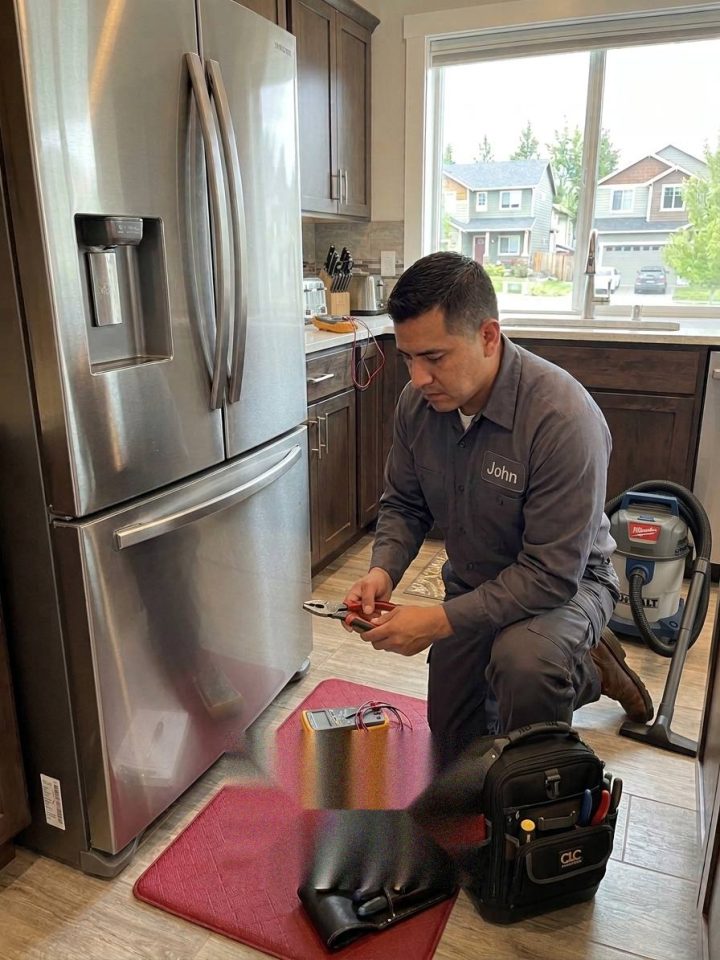
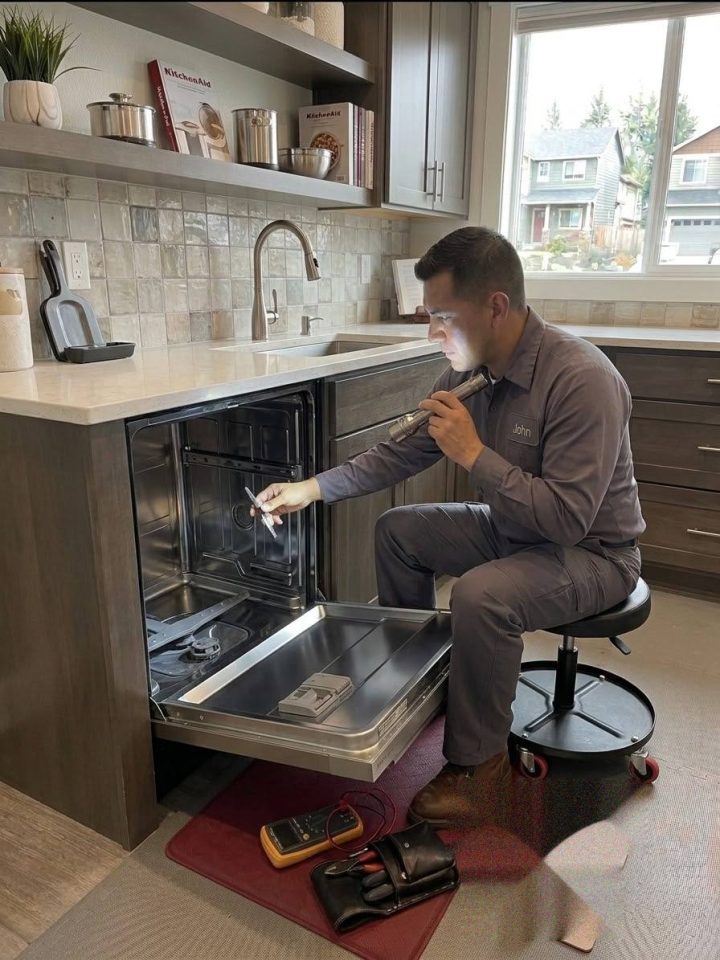
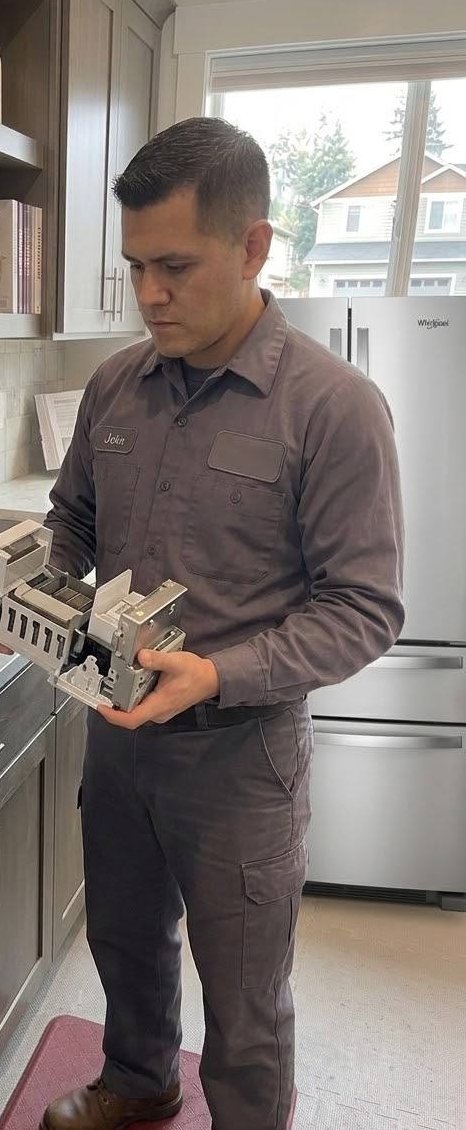
Most silent ice makers are innocent — the trouble sits upstream in pressure, filter or fill line. The visit reads the chain in order, then prices only what actually failed.
Mon–Fri 8–7 · Sat 9–3 · the figure holds parts, labor and the looking — one number, no ceiling games
The module gets blamed first and proven guilty last. Here's the usual order of suspects.
| What You'd Say on the Phone | What It Usually Turns Out to Be |
|---|---|
| “It just stopped making ice.” | Fill line frozen, filter clogged shut, or the shutoff arm nudged into 'off' by a milk jug. The module itself is the last suspect, not the first. |
| “The cubes are tiny or hollow.” | Starved water — pressure, cartridge or inlet valve. The fill volume gets measured, not guessed. |
| “The ice tastes off.” | A stale filter or an open bin absorbing freezer neighbors. Housekeeping cures more ice flavor than hardware does. |
| “It jams every few weeks.” | Fill volume drifting, temperature wandering, or an ejector wearing — a watched cycle names which. |
| “It leaks into the freezer.” | An overfilling valve or a misaligned fill cup, freezing into sheets below. Routine to correct, satisfying to stop. |
| “It never shuts off.” | A failed shutoff arm or sensor — the bin overflows with pride until the door won't shut. Modest fix, dramatic symptom. |
An ice maker is the last link of a chain that starts at the house's water pressure and runs through a filter, a valve and a thin fill line before any mechanism moves. Most 'dead ice maker' calls die somewhere upstream — a cartridge years past its shift, a line frozen by a cold snap, pressure that never recovered after plumbing work. So the visit reads the chain in order and prices only the guilty link. That's how ice calls stay at the friendly end of the slate.
When the module itself has genuinely failed on a healthy water supply, the all-found rule applies as everywhere: from $260, one number with the module, the labor and the diagnosis inside. And when the real problem is the refrigerator around the maker — a freezer running warm, a cabinet on its way out — you'll hear that bigger answer honestly for the visit figure, because funding a new module on a dying fridge is a sale this counter refuses.
This page covers the built-in makers and dispensers inside household refrigerators — the kind nearly every kitchen on the route owns. Standalone commercial ice machines are a different trade with different parts, said plainly up front so nobody pays for the wrong visit.
Nobody remembers filter birthdays. Write the change date on the cartridge — most 'weak ice' complaints are old filters doing their best.
After any filter change or plumbing work, toss the first two harvests — they carry the disturbance, and the taste complaints with them.
If ice stops during a freeze, the fill line likely froze first. Book the thaw-and-find rather than forcing the auger — forcing turns cheap visits into real repairs.
The county's usual suspects — and the quieter labels built on the same lines.
Usually not — a frozen fill line is the likelier story, solved with a careful thaw plus finding what let it freeze. The module faces testing only after the water side clears its name.
From $260, all found — module, labor and diagnosis in one number when the module's truly at fault. Upstream fixes often land closer to the $100 visit itself.
Probably just honest housekeeping: scrub the bin, date the filter, give it two days. If the taste survives that, book the visit and the chain gets read properly.
The under-counter commercial kind, no — different trade, said up front. The built-in modules and dispensers in household refrigerators, all day.
The chain gets read in order, the guilty link gets priced all-found, and the glass gets loud again.

Phone reaches a person through the working day; the form works after hours. Either way the callback comes with a real window, not a maybe.
Mon–Fri 8–7 · Sat 9–3 · a warming refrigerator takes the day's first opening