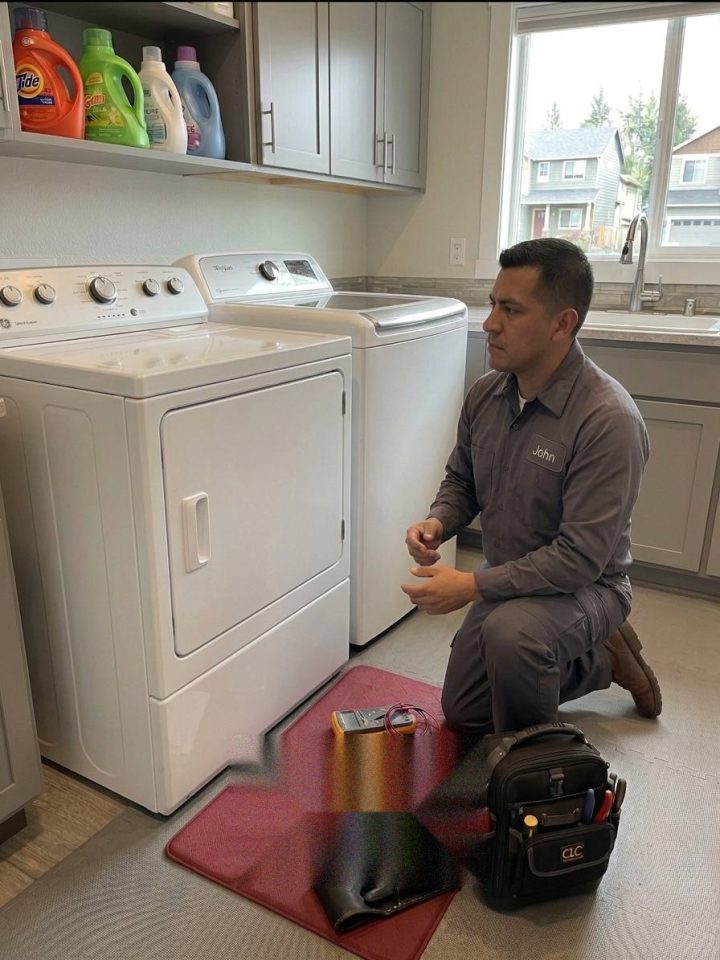
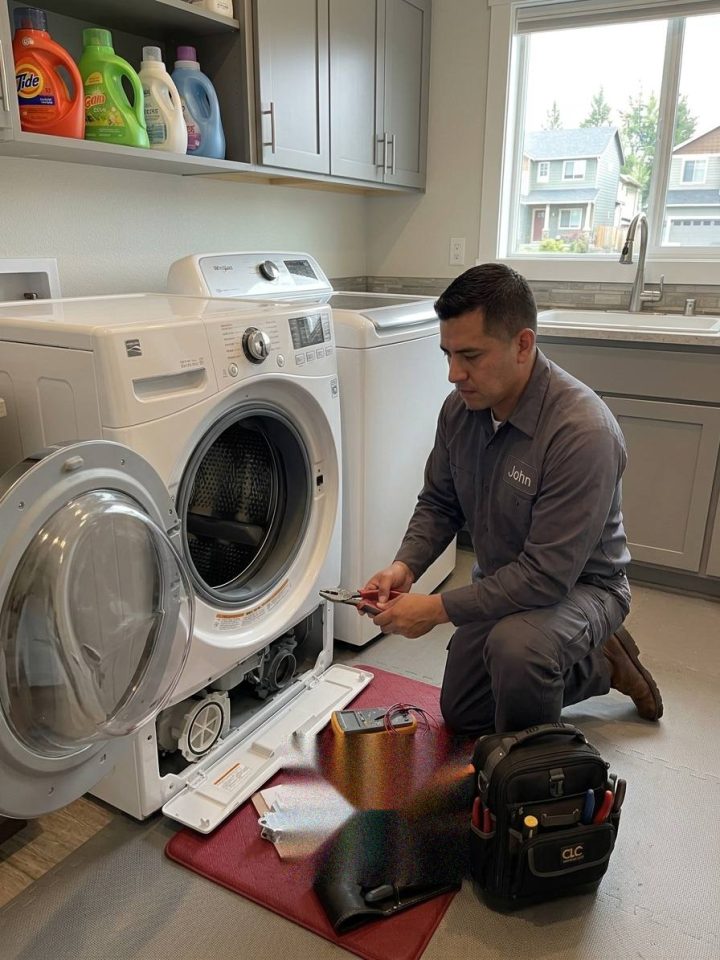
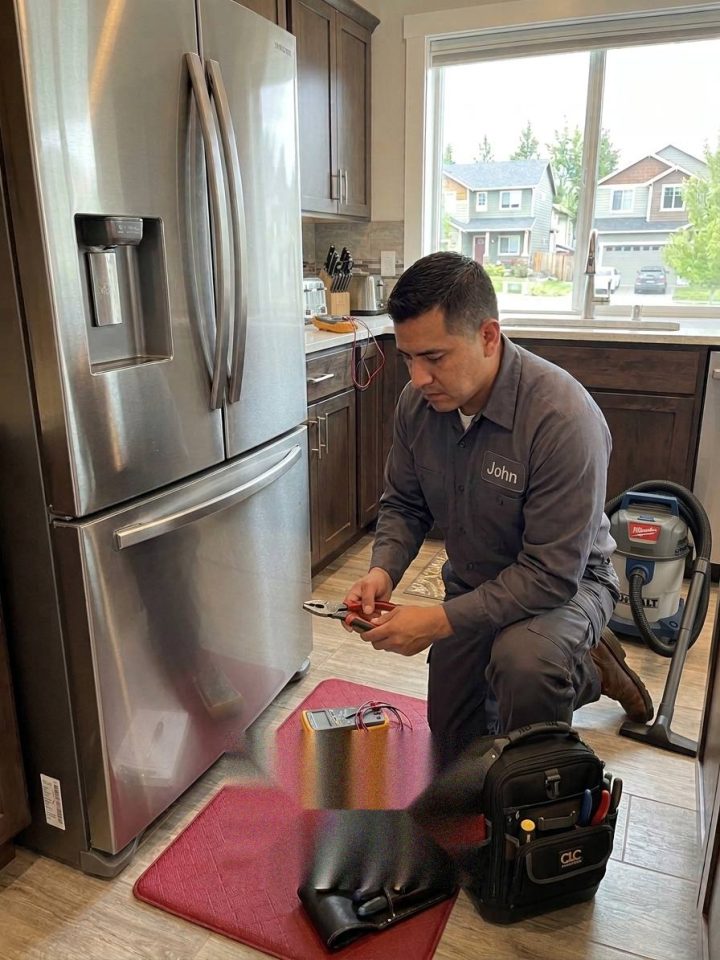
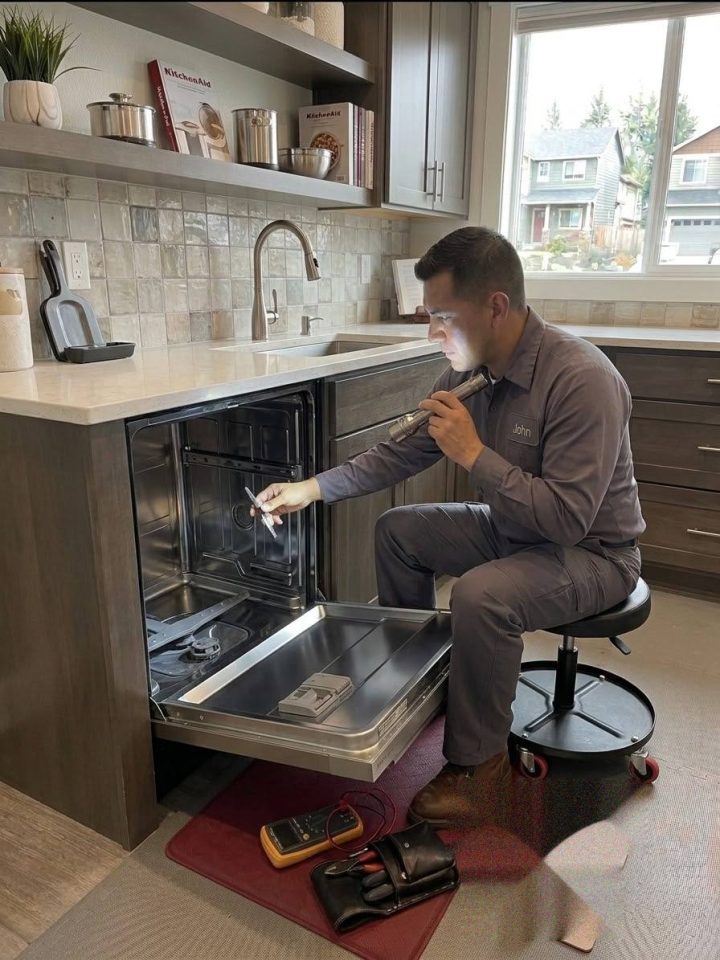
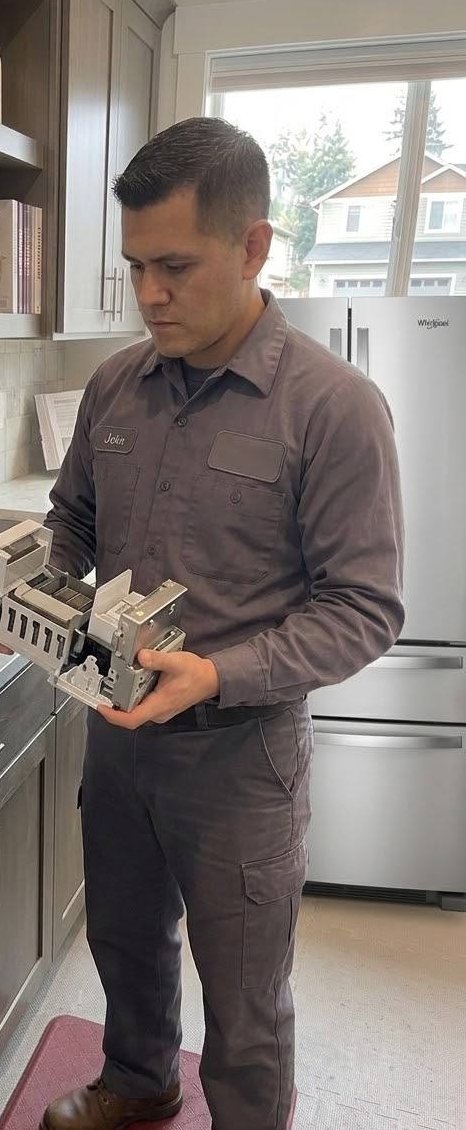
The counter, photographed
Everything people want to know before saying yes — mostly about the figure, which is the point of the figure.
Exactly two: the all-found figure you approve (from $245, depending on machine and fault — part, labor and diagnosis inside), or $100 flat if you stop at the answer. There is no third total, and neither one has an asterisk.
Because ceilings become anchors and anchors become bills. The honest shape of repair pricing is a floor plus your exact figure once the fault is proven — said before work, final after. A published ceiling only teaches invoices to climb toward it.
You hear about it, plainly, with its own figure if you want it fixed — and the number you already approved doesn't move either way. Two faults are two decisions, not one swollen bill.
The counter fixes machines rather than retailing parts — but if the honest answer to your fault is a part-and-YouTube afternoon, you'll hear that at the visit figure. It happens more than the trade admits.
Every completed repair carries written coverage on the part and the labor. If the same fault returns inside the term, the follow-up costs nothing. Your copy rides home with you; the shop's copy means losing yours changes nothing.
Card, cash, check and the usual tap-to-pay — settled when the work is done and proven. No deposits on residential work, and no card surcharge.
Standing practice — tenants open doors while owners approve figures, neighbors hold keys for beach houses, kids in another state approve a parent's repair. One number makes remote yes-saying easy; the arrangement handles the rest.
No — one shop, one counter, on Astor St. If you called around and heard different figures, that's the market working. This one's just the only figure with everything already inside it.
The phone reaches an actual person at the actual counter — try it.
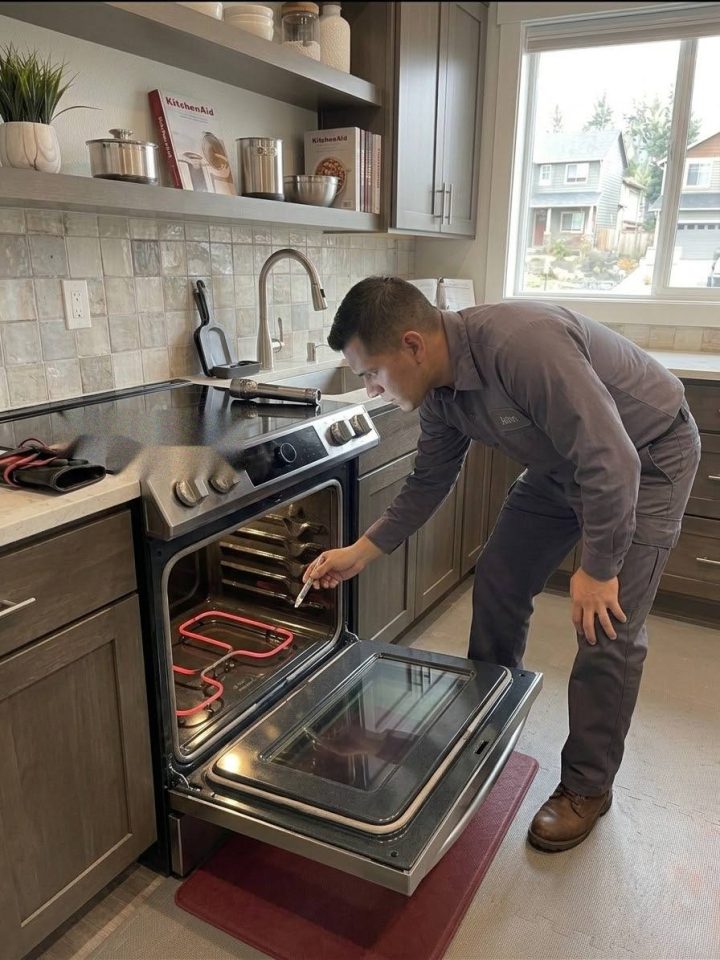
Phone reaches a person through the working day; the form works after hours. Either way the callback comes with a real window, not a maybe.
Mon–Fri 8–7 · Sat 9–3 · a warming refrigerator takes the day's first opening